
by Youssef El Beqqal ·
I Tracked My Money for 6 Months. Here's What Actually Changed.
TL;DR
Six months of tracking spending, investing, and net worth in one place surfaced a subscription bill that had crept to around $800 a month, changed a car purchase decision, and corrected a wrong assumption about where the money was actually going.

Before this, I had a decent income and no real idea where it went. Cash was split across a few accounts, so knowing what I actually had saved meant logging into each one and adding it up by hand. Investments lived in a notes app: a running list of amounts and dates, no history, no way to see how anything had actually grown. Net worth wasn't a number I could look up. It was something I'd have had to reconstruct from scratch every time I wanted it.
The habit that mattered more than any feature
The logging itself changed things before any feature did. Entering a purchase or a contribution by hand takes a few seconds, but doing it consistently for six months meant I was thinking about the number before I spent it, not after. That's a different relationship with money than checking a balance once a month and being surprised by whatever it says.
"Doing well with money has a little to do with how smart you are and a lot to do with how you behave."
Morgan Housel, The Psychology of Money
The car I didn't buy
Around month three I was seriously considering buying a car. When I actually pulled up what I'd been spending on transport, it was already lower than what a car payment plus insurance plus maintenance would run. Nothing about that data told me what to do, it just put the actual comparison in front of me instead of a guess. I decided not to buy.
Where I thought the money was going
If you'd asked me, I'd have said clothes were a real chunk of my monthly spending. They weren't, not close. Travel was the one that actually added up, which is what led to the car question above. Both were flipped from what I assumed, and the only reason I caught it was seeing the categories broken out instead of estimated in my head.
Setting targets I couldn't set before
Once everything was in one place, I set targets for income, net worth, debt, and subscriptions. Net worth was the one that mattered most, and the one a notes app genuinely couldn't do. There's no clean way to track a target against a number you have to reconstruct by hand every time you want to check it. Having it update automatically as accounts and investments change is what actually made it a target instead of a number I hoped would go up.
Six months in, the numbers
Subscriptions were the clearest single win. I was paying somewhere around $800 a month across everything before I actually looked at the full list in one place. It came down to about $450. Most of the gap was overlap I'd stopped noticing: two video streaming services running at once, a music subscription alongside a gaming one I hadn't opened in months, more than one cloud storage plan doing the same job, and a free trial that started charging me a while back without me noticing.
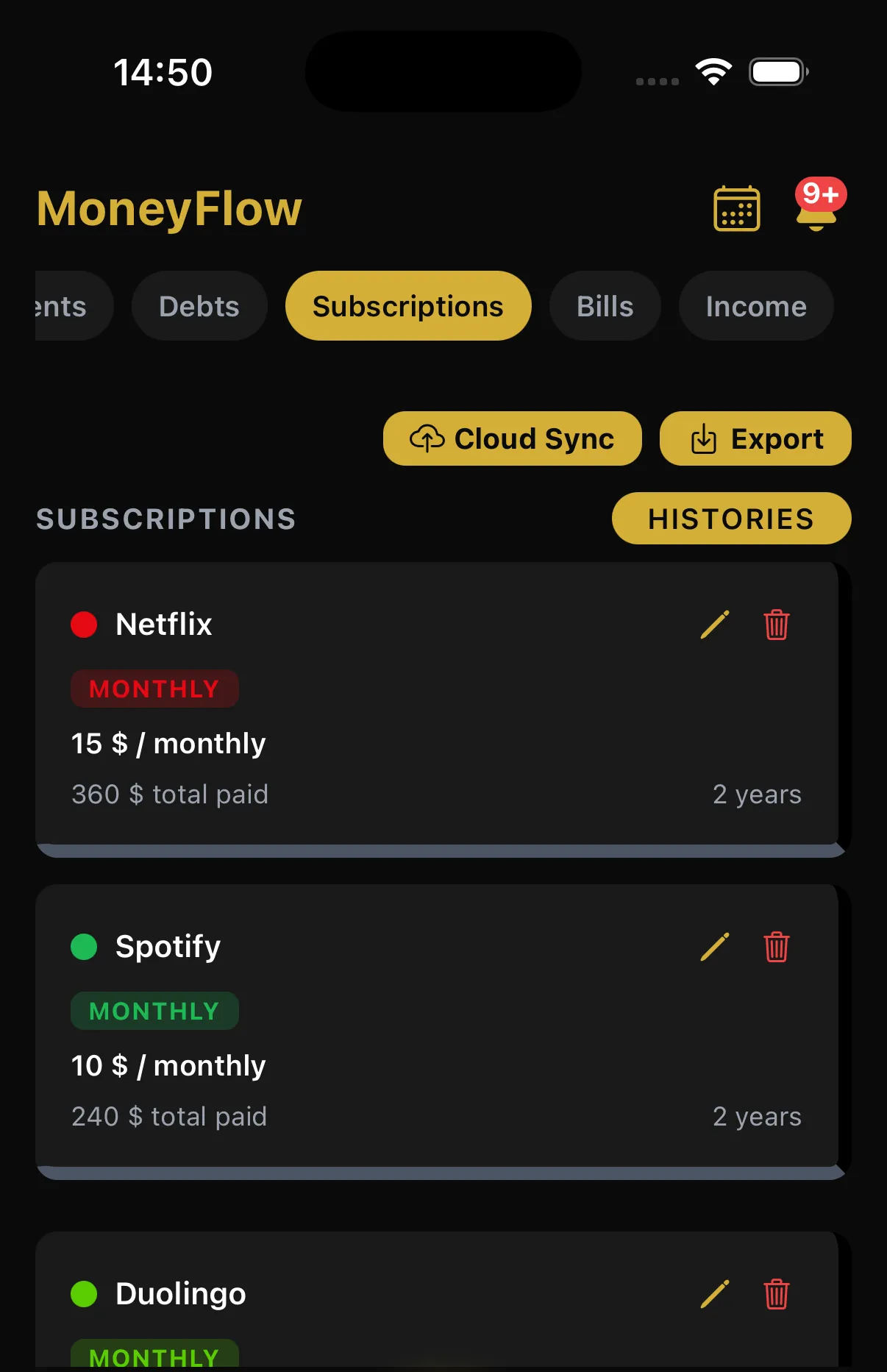 My actual subscriptions list in MoneyFlow, mid-cleanup.
Net worth grew somewhere around 15 to 20% over the same six months. I can't credit all of that to tracking, the market did some of the work on its own. But having contributions and total value sitting next to each other changed how much attention I paid to what I was actually putting in versus what the market did around it.
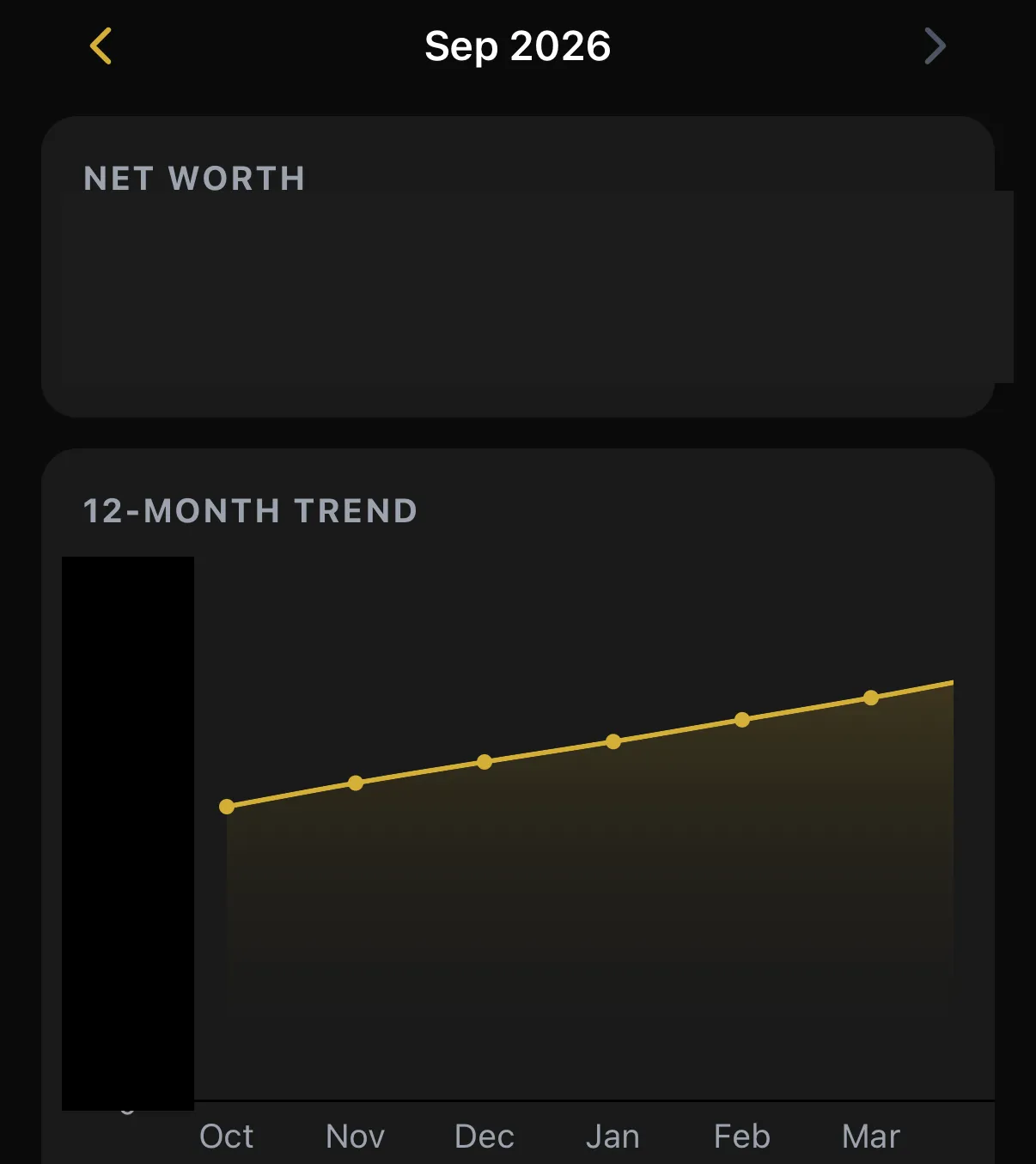 My actual net worth trend in MoneyFlow, six months in (exact figures blurred).
None of this required linking a bank account or untangling a spreadsheet. Getting a monthly and yearly total across spending, bills, debt, subscriptions, and investing was just a matter of having it all logged in the same place to begin with.
No single feature fixed anything on its own. What changed was having one place that reflected what was actually happening with my money, and checking it becoming as normal as checking anything else on my phone. That's the part that's still true six months in.